Onigiri is often called a rice ball in America. I'm not sure of the technical
definition but they can also be called Musubi or Omusubi. If I understand
correctly, musubi means "tied up" so I would think that maybe
originally it referred to the kind of rice ball with a little strip of nori
running around the center but as you can see below, some of the ones labeled as
musubi have no piece of nori.
My understanding is that basically Onigiri is rice that's been pressed into a
ball after putting some water on your hands and a little salt so that as you
press it into a ball you add some favor do it. Of course that's the
base. You can add anything you want to it from using different spices in
the rice to adding stuffing and or wrapping it with a piece of nori or even
scrambled egg or other wrappings.
They are a huge staple here in Japan and especially at convenience stores or combini there are usually 2 or 3 shelves of them that get restocked every couple of
hours, maybe more during peak times like morning rush hour and at night as
people are looking for a snack.
They are made fairly fresh too. I don't know all the details but if they
are more than a few hours old they will get stale, the rice will get hard so I
think they get delivered several times a day.
There are a zillion kind and each different combini chain has it's own
flavors. It seems like every month they try at least 2 new flavors
throughout each chain. For example looking below the Yaki Onigiri and the
Ebi Chiri Chaahan are marked "Shinhatsubai" which means "newly
on sale".
Here's a few I checked out recently.
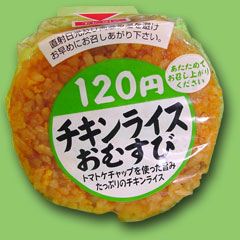
| Chikin RaisuChicken Rice: Pretty much Mexican rice with little bits of chicken in it. Another store has these with an egg crepe rapped around them which makes them a little less messy on your fingers. |
Yaki OnigiriSlighty grilled around the edges, Onigiri. This is a pretty basic kind of onigiri your mom might make though it's not that common at the combini. | 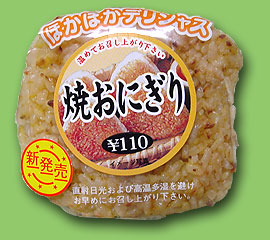
|
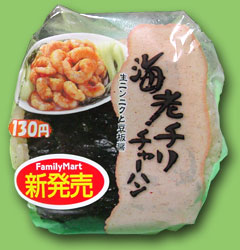
| Ebi Chiri ChaahanShrimp in chili sauce and fried rice. YUMMY!!!! This is one of my favorites. |
Ume ChirimenPlum Crepe? Actually I'm not sure what this is. I know that Ume is a plum and used in cooking it's usually pickled so it's really really sour. You use very little bits of one to flavor the food. | 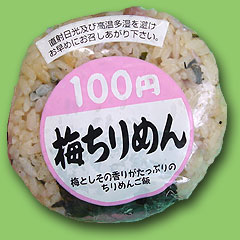
|
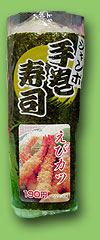
| Ebikatsubreaded fried shrimp temakizushi style. Temakizushi means hand roll. I used to prefer handrolls when I first got here. The reason is there is more stuffing per bite vs. the other shapes but unfortunately there are not nearly as many varieties of handrolls at most stores. |
Toriyaki SooseejiHam sausage and nori with mayo underneath. This is a good one two. In Hawaii you can get something similar except using Spam instead and with no mayo. I like this one better personally, especially warmed. | 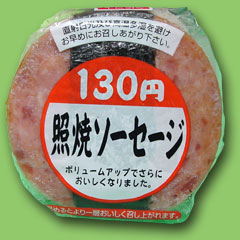
|

| Ebi MayoneezuShrimp and mayo. Think seafood salad. This is always a good one. I guess I just like mayo. |
TakanaI'm assuming that's what this is. It's not listed in any of my dictionaries using that kanji but guessing that would make it mustard leaves which seems about right. It's got little bits of green things like pickles mixed in. It says they are Shaki-shaki which means crispy. | 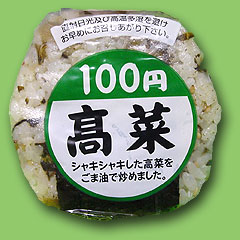
|
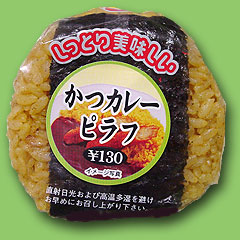
| Katsukaree pirafuBreaded pork in curry sauce pilaf. Yes! |
Shio KarubiSalt Karubi. Karubi is a Korean style of making beef. It's marinated and then grilled. Good stuff. | 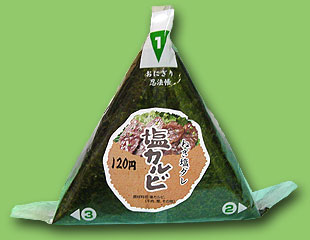
|
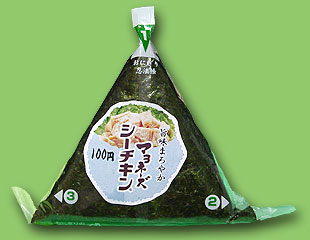
| Shiichikin MayoneezuSea Chicken and Mayo or in other words tuna salad. This is a pretty basic one now a days and it's always good. |
Shake MentaikoShake is Salmon. Mentaiko is some kind of very small fish eggs that are rather spicy. I don't know if they are naturally spicy or if they are prepared that way but they are pretty good. It's common to use them in a cream sauce with pasta too. | 
|
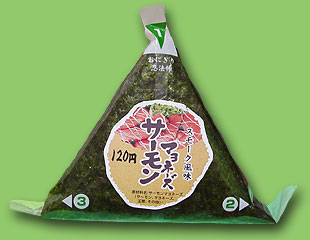
| Saamon MayoneezuSalmon and mayo. If you haven't noticed by now the Japanese like mayo. That's just fine with me. |
|
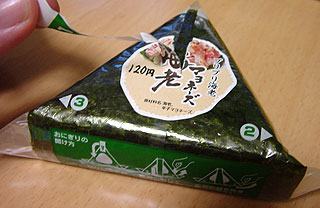
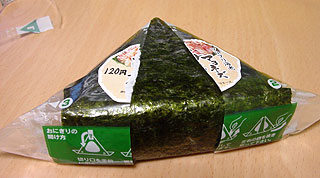
| Another cool thing about Onigiri, especially the triangular kind and the rolled kind. The packaging is ingenious. The thing is, me being lazy, I didn't read the
instructions for the first year I was here. Then one random day I finally looked at the bottom of a triangular onigiri packaging and saw the instructions. First you pull tab #1 which splits the packaging. Then you plug on tabs 2 and 3 to pull the packaging apart. What you can't see is that there are two layers of cellophane so that the nori, the dark green seaweed wrapper is not touching the rice inside until you pull the packaging apart. Otherwise the nori would get sticky and soggy and probably stick to the wrapper. Me, I used to open the page from the back and peel open the inner layer very carefully trying not to get too much stuffing on my fingers. If I had just RTFM (read the friggin manual) I would have not had to worry about it. The rolled kind have a similar mechanism though it's slight more complicated. Seeing this though I used to wonder if Onigiri are supposed to always have dry non soggy nori but I asked one of my teachers and he said it's just a different style. There are both styles and people like different ones. He prefers the soggy style. All the puck shaped onigiri above that have nori are the soggy style. The nori is touching the rice before you buy it. Most specialty stores that sell only onigiri sell the soggy kind. I like'em crisp personally unless they have just a small strip of nori. 😉 |